Spending Smarter Vs Saving Money Differences: Practical Insights For Building Sustainable Wealth
You make money choices every day. Do you know if you are spending smarter or just trying to save money?
These two ideas sound alike, yet they shape your personal finance in very different ways. Knowing the difference helps you take control of your cash instead of reacting to it.

Saving money means keeping more of what you earn, while spending smarter means using your money in ways that bring the most value to your life. Saving often focuses on cutting costs and setting money aside.
Spending smarter focuses on how and why you spend money, so each dollar supports your goals.
When you understand both, you stop seeing spending money as bad and saving money as the only win. You start building habits that support steady growth and long-term financial stability.
Key Takeaways
- Saving money keeps more cash in your account, while spending smarter improves how you use it.
- Smart personal finance requires both careful saving and thoughtful spending.
- Balancing your goals helps you build lasting financial stability.
How Spending Smarter and Saving Money Differ

Spending smarter and saving money both shape your financial security, but they work in different ways. One focuses on how you use your money today, and the other focuses on how much you keep for tomorrow.
Key Principles of Smart Spending
Smart spending means you use your money with purpose. You do not just try to spend less; you try to get the most value from every dollar.
You compare prices, check quality, and think about long-term use. For example, you may buy a durable $80 pair of shoes that lasts two years instead of a $40 pair that wears out in six months.
Smart spending also means knowing your priorities. You spend more on what matters to you and cut back on what does not.
This keeps your spending habits aligned with your goals.
Key actions include:
- Research before buying
- Buy based on value, not impulse
- Focus on needs before wants
- Avoid high-interest debt
Smart spending improves your financial literacy. You learn how money works, how interest adds up, and how small choices affect your budget.
Over time, this builds strong financial habits without forcing you to feel deprived.
Defining Saving Money and Its Role
Saving money means you set aside part of your income instead of spending it. You move that money into a savings account, emergency fund, or investment account.
You save money to prepare for planned and unplanned costs. These may include car repairs, medical bills, travel, or retirement.
Saving money gives you financial security. When you have cash set aside, you avoid using credit cards or loans for basic needs.
Saving often follows a simple rule. For example:
Income | Suggested Savings |
$3,000/month | $300–$600 (10–20%) |
Unlike smart spending, saving money focuses on what you do after you receive income. You decide how much to keep before you decide how much to spend.
Saving builds your safety net. Without savings, even careful spending may not protect you from sudden costs.
Short-Term vs Long-Term Financial Impact
Smart spending often affects your short-term cash flow. When you compare prices or cancel unused subscriptions, you free up money right away.
Saving money has a stronger long-term impact. Money in a savings or investment account can grow through interest or returns.
For example, if you save $200 each month at a 4% annual return, your balance grows steadily over time. Smart spending helps you find that $200.
Saving money turns it into future stability.
Short-term impact:
- Lower monthly bills
- Less waste
- Better control of daily spending habits
Long-term impact:
- Emergency protection
- Reduced debt
- Retirement readiness
Cultivating Effective Money Habits
Strong money habits combine smart spending and saving money. You create a plan, track your expenses, and review your progress each month.
Start with clear steps:
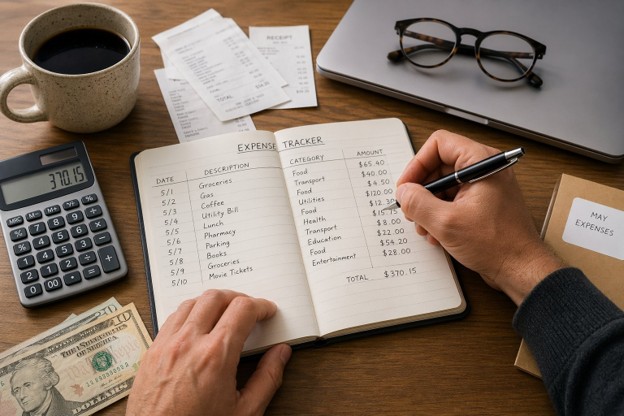
- Track every expense for 30 days.
- Set a fixed savings rate.
- Review major purchases before buying.
These actions shape better financial habits over time. You train yourself to pause before spending and to save money automatically.
Automation helps. When you move money to savings on payday, you remove the temptation to spend it.
Your spending habits reflect your values. Your saving habits reflect your discipline.
Balancing Financial Goals for Lasting Wealth
You build lasting wealth when you control how you spend and save with clear intent. Strong money management comes from a working budget, defined savings goals, and a solid emergency fund.
Creating a Budget That Works
A budget gives your money a job. It supports both spending smarter and saving money at the same time.
Start by tracking your expenses for at least one month. Write down fixed costs like rent, insurance, and loan payments.
Then list variable costs such as groceries, gas, and entertainment.
Use a simple structure like the 50-30-20 rule:
Category | Percentage | Purpose |
Needs | 50% | Housing, food, utilities |
Wants | 30% | Dining out, hobbies, travel |
Savings | 20% | Emergency fund, investing |
Adjust these numbers based on your income and financial goals. If you want to speed up long-term financial goals, raise your savings rate and reduce wants.
Review your budget each month. Update it when your income or expenses change.
Setting Savings and Spending Goals
Clear financial goals guide your daily choices. Without them, budgeting feels restrictive instead of purposeful.
Start with specific savings goals. For example:
- Save $10,000 for a home down payment in three years
- Invest 15% of income into mutual funds for retirement
- Pay off $5,000 in credit card debt within 12 months
Break large goals into smaller monthly targets. This keeps financial planning practical and measurable.
Balance short-term and long-term financial goals. Short-term goals may include travel or a new car.
Long-term goals often focus on retirement or building investments.
Spending goals matter too. Decide how much you will spend on lifestyle choices.
This helps you avoid overspending while still enjoying your income. When you align spending less with clear savings goals, you build discipline without feeling deprived.
Emergency Funds and Financial Freedom
An emergency fund protects your progress.
It keeps one crisis from destroying your savings plan.
Aim to save three to six months of living expenses.
Keep this money in a high-yield savings account where you can access it quickly.
Use your emergency fund only for true emergencies:
- Job loss
- Major medical bills
- Urgent home or car repairs
Do not invest this money in mutual funds or stocks.
Market risk can reduce your balance when you need it most.