How to Track Expenses Without Apps: Simple, Reliable Methods That Work
You do not need apps to track your expenses. You can manage your money with simple tools you already have at home.
A notebook, a pen, and a few minutes each day can give you clear control over where your money goes.
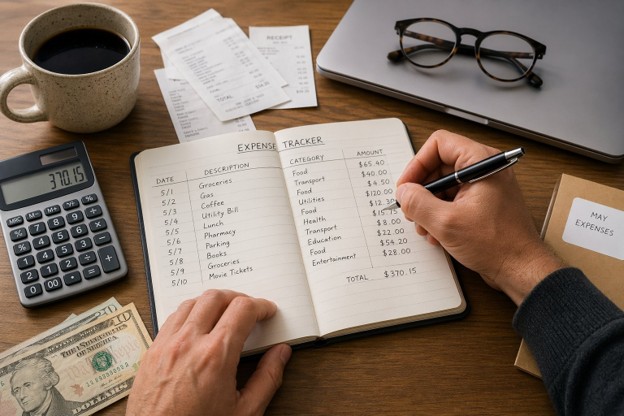
Track your expenses without apps by writing down every purchase in a notebook, reviewing it weekly, and comparing it to a simple monthly budget.
This hands-on method helps you see patterns, cut waste, and stay aware of your spending.
When you write things down yourself, you pay closer attention and make better choices.
If you want a system that feels simple and steady, you can build one that fits your routine.
With a small daily habit and a clear plan, you stay in control without relying on technology.
Key Takeaways
- Write down every expense daily and review it each week.
- Use simple tools like a notebook and a basic monthly budget.
- Build a routine you can maintain over time.
Effective Manual Methods for Expense Tracking
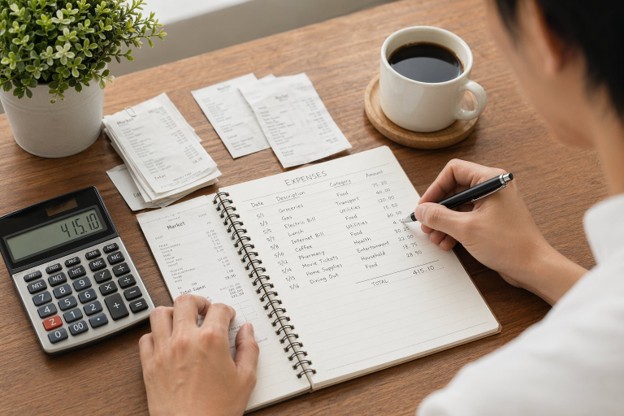
You can track expenses with simple tools and clear steps. Paper systems and basic spreadsheets give you full control over your budgeting process.
When you stay consistent and organize expense categories well, you see where your money goes and where you can adjust.
Notebook and Pen Techniques
A notebook and pen give you a direct way to track expenses every day. You write each purchase as soon as it happens.
This habit keeps details fresh and accurate.
Divide each page into clear columns:
Date | Description | Category | Amount |
Record fixed expenses like rent, insurance, and subscriptions at the start of the month.
Then log variable expenses such as groceries, gas, and eating out as they occur.
Keep your expense categories simple.
Common budget categories include:
Housing
Utilities
Food
Transportation
Entertainment
Savings
Review your notebook once a week. Add up totals for each category and compare them to your budgeting plan.
This regular review helps you catch overspending early.
Using Spreadsheets for Financial Clarity
A spreadsheet offers structure while still keeping things manual. You enter data yourself, which helps you stay aware of your spending.
Create columns for date, payee, category, and amount.
Use one sheet for monthly expense tracking and another for a yearly overview. This layout lets you see patterns over time.
You can use simple formulas to total each expense category. For example, use a SUM formula to add all grocery expenses for the month.
This step saves time and reduces math errors.
Separate fixed expenses from variable expenses in different sections.
Fixed costs stay mostly the same. Variable costs change and often need closer control.
Update your spreadsheet at least twice a week. Frequent updates keep your budgeting accurate and prevent missed entries.
Implementing the Envelope System
The envelope system uses cash and labeled envelopes to control spending. You assign a set amount of money to each budget category at the start of the month.
Label each envelope with a category name, such as:
- Groceries
- Gas
- Dining Out
- Personal Care
Place the planned cash amount inside each envelope. When you spend money in that category, take it only from the matching envelope.
If the envelope becomes empty, you stop spending in that category.
This rule creates a clear limit and supports strong budgeting habits.
Use this envelope method mainly for variable expenses.
Keep fixed expenses in your bank account since they often require electronic payment.
Optimizing Expense Categorization
Clear expense categorization makes expense tracking more useful. If your categories are too broad, you miss details.
If they are too narrow, tracking becomes hard to manage.
Start with main budget categories such as housing, food, transportation, debt payments, and savings.
Then add subcategories only if needed. For example:
- Food
- Groceries
- Restaurants
Separate fixed expenses from variable expenses in your records. This split shows which costs you can control more easily.
Review your expense categories every few months.
Remove unused ones and adjust those that no longer fit your spending.
Choosing and Maintaining Sustainable Expense Habits
You need clear routines, tools that fit your goals, and regular reviews to make tracking expenses work long term.
Simple systems and steady habits matter more than any expense tracking app.
Building Consistency and Routine
Set a fixed time each day to record your spending.
Many people choose right after dinner or before bed.
The key is to link tracking expenses to a habit you already follow.
Keep your tools in one place. Store your notebook, receipts, and pen in a small folder or envelope.
If you use a spreadsheet on your computer, save it on your desktop so you see it daily.
Use a short checklist:
- Record every purchase
- Label it with a clear category
- Update your running total
- Compare it to your monthly budget
Small gaps turn into large errors. If you miss a day, catch up within 24 hours.
Consistency builds strong personal finance habits and reduces guesswork at the end of the month.
Adapting Methods for Personal Finance Goals
Choose a method that supports your current goal. If you want to pay off debt, track balances and interest rates next to your daily expenses.
If you want to save more, highlight savings deposits in bold or a different color.
Your tracking system should match your priorities. For example:
| Goal | What to Track Closely | Extra Action |
| Build an emergency fund | All non-essential spending | Move saved amount weekly |
| Pay off credit cards | Minimum vs. actual payment | Add extra to highest interest |
| Control grocery costs | Weekly food totals | Set a firm weekly limit |
You do not need budgeting apps like YNAB or Goodbudget to follow zero-based budgeting.
You can assign every dollar on paper. Write expected income at the top of the page and subtract planned expenses until you reach zero.
Review your goals every three months. Life changes, and your tracking method should change with it.
Leveraging Offline Trackers and Hybrid Solutions
Paper systems work well when you want fewer distractions. A small ledger book can act as your expense tracker.
Divide pages into categories such as housing, food, transport, and savings.
You can also print monthly bank statements and highlight each expense by category. This method helps you see patterns quickly.
Use one color per category to stay organized.
A hybrid system can add structure without relying on expense tracking apps.
For example:
- Record daily spending in a notebook
- Enter totals into a simple spreadsheet once a week
- Store receipts in a labeled envelope
This approach gives you a backup copy of your data. If you stop using an expense tracking app, you still control your records.
You avoid subscription fees while keeping accurate personal finance data.
Integrating Budget Reviews and Emergency Funds
Schedule a weekly budget review.
Set aside 20 to 30 minutes to compare your planned budget with actual spending.
Mark any category where you went over.
Adjust early instead of waiting for the month to end.
If dining costs rise too fast, reduce spending in another flexible category right away.
Track progress toward your emergency fund.
Write the target amount at the front of your notebook.
Many people aim for three to six months of basic expenses.
Each time you add money, update the total in bold.
Treat your emergency fund as a fixed expense in your budget, not an afterthought.