Cash Envelope System for Beginners Guide: Simple Steps to Take Control of Your Budget
You want a simple way to control your spending and stop wondering where your money went.
The cash envelope system gives you a clear plan you can see and touch.
It helps you set limits and stick to them without apps or complex tools.
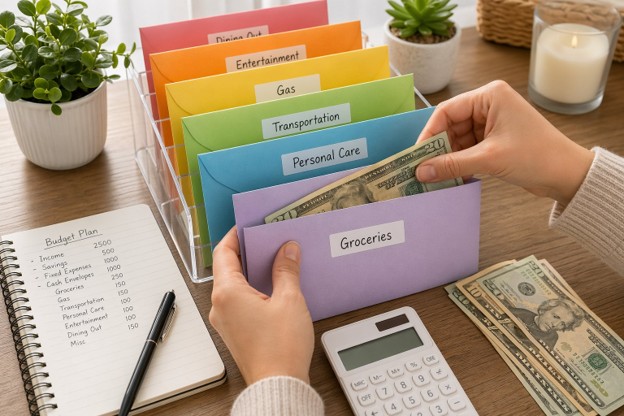
The cash envelope system helps you control spending by using cash in labeled envelopes for each budget category.
You decide how much to spend on things like groceries, gas, or fun, place that amount in separate envelopes, and stop spending in a category when the cash runs out.
This method makes your limits clear and forces you to stay aware of every dollar.
When you follow this guide, you will learn how to set up your envelopes, choose the right categories, and adjust the system to fit your life.
Key Takeaways
- You use cash in labeled envelopes to control how much you spend in each category.
- You stop spending in a category when the envelope is empty.
- You can adjust categories and amounts to match your income and goals.
How the Cash Envelope System Works
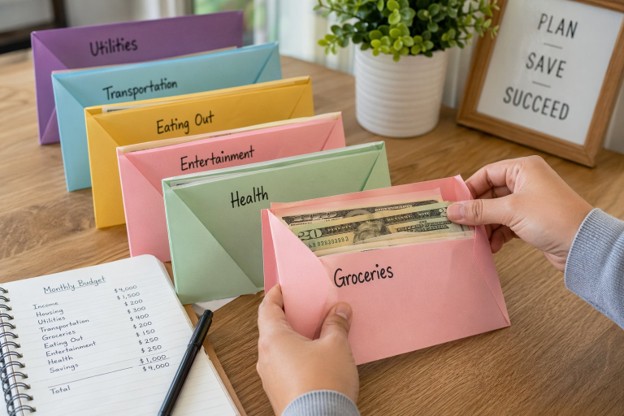
The cash envelope system gives each dollar a clear job.
You divide your income into set spending categories and place the exact cash amount into labeled envelopes.
When an envelope is empty, you stop spending in that category.
Origins and Key Principles
The cash envelope system, also called the envelope method or cash envelope budgeting, started as a simple way to control spending before debit cards were common.
People used paper envelopes to divide their monthly budget into clear spending categories.
The main rule is simple: spend only what is inside each envelope.
You do not borrow from other envelopes unless you choose to adjust your plan on purpose.
This budgeting method works because cash feels real.
When you see money leave your hands, you notice it more than when you swipe a card.
- Use cash for variable expenses.
- Set clear limits for each category.
- Stop spending when the envelope is empty.
- Review and refill during your next pay period.
Setting Up Your Budget Categories
Start with your monthly budget.
List fixed bills like rent and utilities, but focus your cash envelopes on flexible spending.
Common cash envelope categories include:
- Groceries
- Gas
- Dining out
- Fun money
- Household items
- Personal care
For example, if your grocery budget is $500 per month, you place $500 in your grocery envelope.
If you budget $150 for fun money, that amount goes into a separate envelope.
Keep the number of envelopes manageable.
Most beginners use 5 to 10 cash envelopes.
Ask yourself how many cash envelopes you truly need.
Too many can feel hard to manage.
Focus on areas where you often overspend.
Choosing and Organizing Envelopes
You can use plain paper envelopes, labeled cash envelopes, or a zippered cash envelope wallet.
Envelope wallets help you carry several categories at once without losing track.
Choose a system that fits your routine:
Option | Best For |
Paper envelopes at home | Simple setup, low cost |
Laminated envelopes | Long-term use |
Cash envelope wallet | On-the-go spending |
Label each envelope clearly with the category name and budget amount.
During envelope stuffing, count the cash and place the correct amount inside each one.
Store envelopes in a safe place.
Carry only what you need for the week if that feels safer.
Stay consistent with your envelope budgeting.
When you handle the cash often, you stay aware of your spending habits.
Implementing and Adapting the Envelope Method
You can use physical cash or digital tools to run your envelope budgeting system.
The key is to set clear spending limits, track spending often, and adjust when your numbers change.
Using Cash Versus Digital Envelopes
You can start with cash stuffing, where you place paper money into labeled envelopes such as groceries, gas, and personal spending.
When the envelope is empty, you stop spending.
This creates a clear spending limit and reduces impulse purchases.
A cash budget works well if you overspend with debit or credit cards.
It forces you to see your money leave your hands.
Many people who follow Dave Ramsey prefer this hands-on method.
If you rarely use cash, try a digital envelope system.
Budgeting apps like EveryDollar, You Need a Budget, and Goodbudget offer digital envelopes.
These digital cash envelopes let you assign money to categories and track spending from your phone.
Digital envelope apps update in real time when linked to your bank.
You still set limits, but you do not carry cash.
Choose the method you will actually use every week.
Managing Variable and Fixed Expenses
Start by separating fixed expenses from variable expenses.
Fixed Expenses | Variable Expenses |
Rent or mortgage | Groceries |
Insurance | Gas |
Phone bill | Dining out |
Subscriptions | Personal spending |
Fixed expenses stay the same each month.
Fund these first using your income.
Variable expenses change.
Set realistic amounts based on past spending.
Review the last three months of bank statements to build a realistic budget.
Plan for irregular expenses with sinking funds.
A sinking fund is money you set aside each month for costs like car repairs, holidays, or annual insurance.
Use a sinking funds tracker to record each deposit.
Keep a separate envelope for your emergency fund and one for debt payment if needed.
Treat these like required bills, not optional goals.
Tracking Spending and Adjusting Your System
You must track spending at least once a week.
Write each purchase on the envelope or log it in your budgeting app.
If you overspend in groceries, move money from another category like entertainment.
This keeps your cash envelope system balanced.
Do not ignore the problem.
Review your budget at the end of each month.
Ask:
- Did you stay within each spending limit?
- Were your sinking funds enough?
- Did you make progress toward your financial goals?
Adjust amounts based on real numbers, not guesses.
A realistic budget works better than a strict one you cannot follow.
Tips for Building Discipline and Achieving Financial Goals
Discipline grows from small habits.
Check your envelopes before you shop.
Bring only the cash you need to avoid impulse purchases.
Use simple budgeting tips to stretch your money.
Try couponing for groceries.
Plan meals before shopping.
Delay personal spending for 24 hours before buying.
Set clear financial goals such as:
- Save $1,000 in an emergency fund
- Pay off a credit card
- Build a $500 holiday sinking fund
Write these goals where you see them often.