Cheapest Healthy Foods To Buy Weekly: Smart, Budget-Friendly Staples For Balanced Nutrition
You want to eat well without spending too much each week.
The good news is you can build healthy meals around simple, low-cost foods that give you strong nutrition for less money.
When you choose the right staples, you stretch your budget and still fuel your body well.
The cheapest healthy foods to buy weekly include beans, rice, oats, eggs, frozen vegetables, potatoes, bananas, and canned tuna. These foods cost less per serving, last longer, and work in many meals.
You can mix and match them to create filling breakfasts, lunches, and dinners without wasting food.
Smart choices at the store make a big difference over time.
When you plan simple meals around these basics, you lower your grocery bill and avoid last-minute takeout.
Key Takeaways
- Focus on low-cost staples that offer strong nutrition per serving.
- Build simple weekly meals around versatile, long-lasting foods.
- Plan ahead to cut waste and control your grocery spending.
Core Budget-Friendly Foods for Weekly Shopping
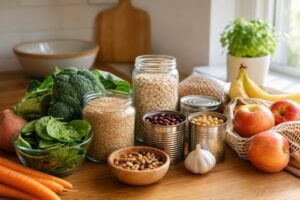
You can build cheap, healthy meals by focusing on simple whole foods that store well and work in many recipes.
Fresh produce, basic grains, low-cost proteins, and a few pantry staples give you steady nutrition without raising your grocery bill.
Affordable Fruits and Vegetables
Choose produce that is low in cost, high in fiber, and easy to store.
Bananas, apples, oranges, and cantaloupe often cost less per pound than berries and other specialty fruit.
They work well for snacks, oatmeal, or plain yogurt.
For vegetables, focus on carrots, onions, cabbage, potatoes, and sweet potatoes.
These last for weeks in a cool, dry place.
You can roast them, add them to soups, or use them in stir-fries.
Buy broccoli, zucchini, cucumber, and green beans when they are in season and on sale.
If prices are high, choose frozen vegetables, frozen spinach, frozen mixed vegetables, or frozen edamame.
Frozen produce keeps its nutrients and reduces waste.
Canned options like canned corn and canned tomatoes also help you stretch meals.
Use them in pasta dishes, chili, and casseroles.
Nutritious Grains and Starches
Grains and starches give you steady energy at a low cost per serving.
White rice, brown rice, oats, and pasta are some of the cheapest foods in the store.
A large bag of rice can last weeks.
Use brown rice for more fiber, or white rice when you want a softer texture and longer shelf life.
Add beans, lentils, or vegetables to make a full meal.
Rolled oats and oatmeal make an easy breakfast.
Cook them with milk and top with bananas or frozen berries.
You can also blend oats into smoothies or bake them into snacks.
Choose whole wheat pasta, whole wheat spaghetti, or lentil pasta for more fiber and protein.
Quinoa costs more than rice but offers complete protein, so use it when it fits your budget.
For quick sides, keep whole grain bread and popcorn kernels on hand.
Popcorn kernels are cheap and make a simple whole-grain snack.
Low-Cost Protein Staples
Protein does not have to be expensive.
Eggs, dried beans, lentils, and peanut butter give you high nutrition for a low price.
Buy dried beans and lentils in bulk when possible.
They cost less than canned beans and last for months.
If you need convenience, choose canned beans or canned chickpeas and rinse them to lower sodium.
Canned tuna, sardines, and other canned fish provide protein and healthy fats.
Use them in sandwiches, salads, or rice bowls.
For animal protein, look for sales on ground beef or ground turkey.
Cook and freeze extra portions for later meals.
Tofu, milk, and plain yogurt also offer affordable protein, especially when bought in large containers.
Essential Pantry and Freezer Items
Stock your pantry with items that stretch simple meals.
Canned tomatoes, canned corn, canned beans, rice, pasta, and peanut butter form the base of many low-cost dishes.
Keep frozen berries, frozen spinach, and frozen mixed vegetables in your freezer.
You can add them to smoothies, soups, and stir-fries without worrying about spoilage.
Store potatoes, onions, and sweet potatoes in a cool, dark place to extend their shelf life.
Pair them with eggs, beans, or ground meat for filling meals.
Smart Weekly Shopping and Meal Planning Strategies
You save more money when you plan your weekly groceries with clear steps.
Focus on cost per serving, simple meals, and foods that last all week.
Maximizing Value With Bulk and Store Brands
You cut costs fast when you buy in bulk for foods you use often.
Focus on pantry staples like oats, brown rice, dry beans, lentils, and frozen chicken.
Check the cost per serving, not just the total price.
Store brands often match national brands in quality.
Compare labels for protein, fiber, and sodium.
Choose the lower price when the nutrition is similar.
Build a cheap grocery list around repeat items.
- 5-pound bag of rice
- Dry or canned beans
- Store-brand Greek yogurt
- Store-brand dairy alternatives
- Peanut butter
- Canned tomatoes
If you shop for one, split bulk packs and freeze portions.
This step helps you stay within your food budget and avoid waste.
Shop mid-week when stores often restock and mark down items.
Plan your grocery list on a budget before you go, and stick to it.
Incorporating Seasonal and Frozen Produce
You lower your grocery bill when you buy seasonal produce.
In summer, choose tomatoes, zucchini, and berries.
In fall, pick apples, carrots, and cabbage.
Seasonal fruits and vegetables cost less because stores stock more of them.
Look for affordable fruits that feel firm and heavy for their size.
Frozen fruits and vegetables offer another smart option.
They last longer and help you reduce food waste.
Buy:
- Frozen spinach
- Frozen mixed vegetables
- Frozen berries
- Frozen mango
Use frozen fruit in oatmeal or smoothies.
Add frozen vegetables to soups, stir-fries, and pasta.
Keep a mix of fresh and frozen produce on your healthy grocery list.
This balance gives you budget-friendly fruits and steady access to nutrients all week.
Practical Tips for Portion Control and Reducing Food Waste
You control your food budget by planning portions before you cook.
Measure rice, pasta, and cereal with standard cups instead of guessing.
Cook only what you need for each meal.
If you cook extra, freeze portions right away in labeled containers.
Write the date on each one.
Store food where you can see it.
Place older items in front so you use them first.
This simple habit helps reduce food waste.
Use leftovers in new ways.
Turn roasted vegetables into omelets.
Add beans to salads.
Mix cooked rice into soups.
Add fermented foods like sauerkraut in small amounts to stretch meals.
A few spoonfuls add flavor without raising cost.
Track what you throw away for one week.
Then adjust your 7-day meal plan to match what you actually eat.
Budget-Friendly Meal Prep for the Week
You stay on budget when you follow a simple meal planning routine.
Start with a 7-day meal plan built around low-cost foods.
Try a basic budget meal plan:
- Breakfast: Oatmeal with frozen fruit
- Lunch: Rice, beans, and roasted vegetables
- Dinner: Stir-fry, soup, or baked potatoes
- One meatless Monday meal using plant-based protein like lentils
Choose two proteins, two grains, and three vegetables for the week.
This method keeps your grocery list for one or a family short and clear.
Prep food once or twice a week.
Chop vegetables, cook grains, and portion snacks.
Store meals in clear containers.
Keep a printable grocery list on your phone or fridge.
A planned grocery list on a budget helps you avoid impulse buys and stick to smart shopping strategies.